
History of Swing Dance
Swing is much more than a dance.
It is a celebration of music, freedom, creativity and human connection. It has crossed continents, survived difficult times and continues to bring people together almost a century after it first emerged.
It is also the story that inspired the name Saint Savoy.
Where It All Began
In the late 1920s, Harlem, New York became the birthplace of a remarkable cultural movement.
Rooted in the creativity of African-American communities, a new musical language was taking shape. Jazz evolved into Swing, blending African rhythms, blues and improvisation with European instruments and orchestral traditions. The result was something entirely new—music full of energy, optimism and irresistible rhythm.
At the same time, dancers were creating an equally exciting new way of moving.
Drawing inspiration from Charleston, Breakaway, Foxtrot, Tap Dance and countless African-American social dances, they developed what would become Lindy Hop—a dance built on musicality, improvisation and joyful conversation between partners.
Many of today’s most popular styles of music and social dance can trace their roots back to those extraordinary years in Harlem.
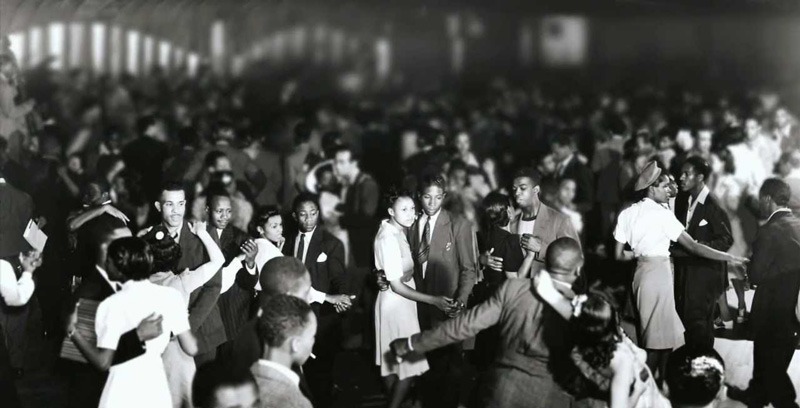
The Savoy Ballroom
If Swing had a home, it was the Savoy Ballroom.
Opened in Harlem in 1926, the Savoy quickly became one of the most important dance halls in the world—and one of the very few places in segregated America where people of different races and social backgrounds could dance together.
That alone made it revolutionary.
But the Savoy was much more than a ballroom.
It was a creative laboratory.
Night after night, musicians and dancers inspired one another. The music became bolder. The dancing became more expressive. Every performance, every jam circle and every friendly competition pushed both art forms to new heights.
Legendary bandleaders including Chick Webb, Count Basie, Duke Ellington and Benny Goodman filled the ballroom with music, while dancers such as George “Shorty” Snowden, Frankie Manning, Leon James and Norma Miller continually redefined what Swing dancing could become. In the decades that followed, Dawn Hampton became one of the most influential guardians of this tradition, inspiring generations of dancers and helping preserve the authentic African-American spirit at the heart of Swing.
Music inspired movement.
Movement inspired music.
Few places in history have shaped popular music and social dance as profoundly as the Savoy Ballroom.
The Birth of Lindy Hop
The dance itself evolved naturally rather than being invented overnight.
Its foundations lay in African-American social dances, enriched by influences from Charleston, Breakaway, Foxtrot and Tap Dance. Improvisation, humour, rhythm and personal expression were always at its heart.
According to the most famous story, the name Lindy Hop appeared shortly after Charles Lindbergh’s solo flight across the Atlantic in 1927.
When a reporter asked dancer George “Shorty” Snowden what dance he was performing, he reportedly replied:
“The Lindy Hop.”
Whether the story unfolded exactly that way remains uncertain—but the name endured, becoming synonymous with one of the world’s most joyful partner dances.
From Harlem to the World
Thanks to radio broadcasts, touring orchestras and Hollywood films, Swing rapidly spread across the United States and eventually around the globe.
From Lindy Hop grew dance styles such as Jitterbug, Boogie Woogie, Rock ‘n’ Roll and, later, West Coast Swing.
Meanwhile, in France, Romani musicians developed the distinctive sound of Manouche Jazz, immortalised by the legendary Django Reinhardt.
Swing was no longer simply a local phenomenon.
It had become an international language.
Swing in Europe
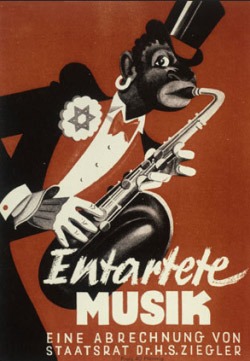
Swing arrived in Europe at a difficult moment in history.
During the Nazi era, Jazz and Swing were condemned as “degenerate music” (Entartete Musik). Yet many young people refused to abandon the music they loved.
The Swing Youth in cities such as Hamburg, Berlin and Vienna embraced jazz, dancing and an open-minded international outlook. Their style, music and optimism quietly challenged the conformity of the regime.
Many paid a heavy price for that freedom.
Some were imprisoned.
Others were sent to concentration camps.
Their story reminds us that music and dance have always represented far more than entertainment—they have also been powerful expressions of identity, hope and freedom.
Why Saint Savoy?
The name Saint Savoy is our tribute to the legendary Savoy Ballroom.
That extraordinary place reminds us that some of the world’s greatest cultural achievements emerge when different traditions meet with openness, curiosity and mutual respect.
The rhythms of Africa blended with European musical traditions.
Improvisation met elegance.
Community overcame division.
Together they created music and dances that continue to bring joy to millions of people around the world.
By choosing the name Saint Savoy, we also want to honour the people who created this culture—many of whom achieved extraordinary things despite discrimination, segregation and enormous social hardship.
Every time we dance, we celebrate their creativity, resilience and generosity.
Their legacy lives on in every Swing band, every social dance and every smiling couple on the dance floor.
Swing Today
Nearly one hundred years after it first emerged, Swing is flourishing around the world. The worldwide Swing revival owes an enormous debt to legendary dancers and teachers such as Frankie Manning, Norma Miller and Dawn Hampton. Through their generosity, wisdom and passion, they passed on not only the steps, but also the spirit, values and rich cultural heritage of African-American Swing to new generations around the world.
From London and Vienna to Seoul, Melbourne, Buenos Aires and Tokyo, vibrant communities gather every week to dance Lindy Hop, Balboa, Charleston, Solo Jazz, Blues, Collegiate Shag, Boogie Woogie, Rock ‘n’ Roll and many more styles inspired by the Swing era.
International festivals welcome thousands of dancers every year, while local social dances continue to introduce new generations to this remarkable culture.
Swing has never really been about perfect steps.
- It is about listening.
- Improvising.
- Connecting.
- Laughing.
- Sharing music with another person.
And perhaps that is why, almost a century later, it still feels wonderfully alive.
“We fought a war with music and dance, and that’s what opened the doors.”
Norma Miller,
legendary Lindy Hopper, choreographer and member of Whitey’s Lindy Hoppers

 Deutsch